The Social Game
Understanding Your Place in the World
In the LifeOS theory, every human being is constantly playing six different games.
The Personal Game was about you:
your character,
your habits,
your emotions,
and your closest relationships.
But the Social Game begins where the Personal Game ends.
This game is about everything beyond you.
It is about:
how you interact with society,
how you deal with people outside your inner circle,
how you behave in groups and communities,
how you contribute to the world,
and even how you coexist with nature itself.
Because no human being truly lives in isolation.
Every person exists within systems:
families,
schools,
companies,
cultures,
nations,
economies,
and ecosystems.
And whether we realise it or not, we are constantly influencing and being influenced by the world around us.
That is the Social Game.
Why the Social Game Matters
Many people underestimate how much of life depends on social understanding.
Talent alone is rarely enough.
A person may be intelligent, hardworking, and skilled — yet still struggle in life because they cannot:
communicate properly,
work with others,
understand people,
lead teams,
or navigate society effectively.
At the same time, someone with average technical skills but excellent social understanding can create enormous influence.
Because humans are social beings.
Opportunities often come through people.
Growth often happens through collaboration.
Leadership exists only because groups exist.
And beyond human society itself, this game also includes our relationship with:
animals,
nature,
resources,
and the planet as a whole.
The Social Game is ultimately about coexistence.
The Core Attributes of the Social Game
To play this game effectively, certain abilities become essential.
1. Communication Skills
Communication is one of the most powerful abilities in human life.
Not because it sounds impressive.
But because almost everything depends on it.
Your ideas become valuable only when you can express them clearly.
Communication includes:
public speaking,
one-on-one conversations,
negotiations,
storytelling,
listening,
emotional expression,
and understanding non-verbal behaviour.
Many conflicts are not caused by bad intentions.
They are caused by poor communication.
A misunderstanding.
A wrong tone.
An assumption.
An inability to express emotions honestly.
Strong communication builds:
trust,
influence,
opportunities,
and deeper understanding between people.
And interestingly, communication is not just speaking well.
Listening well is equally important.
Sometimes people do not need advice.
They simply need to feel heard.
2. Relationship Skills Beyond Your Inner Circle
The Personal Game focused on close relationships like:
parents,
life partner,
children,
and close friends.
The Social Game expands beyond that.
It includes:
colleagues,
classmates,
mentors,
teams,
communities,
professional networks,
and society at large.
This game teaches an important truth:
Not every relationship needs emotional closeness to be meaningful.
Some relationships are built on:
respect,
collaboration,
trust,
professionalism,
and mutual growth.
Understanding how to interact with different kinds of people is a major life skill.
Because in reality, life constantly requires teamwork.
No great company, movement, organisation, or civilisation was built by isolated individuals alone.
3. Leadership Skills
Leadership is one of the highest levels of the Social Game.
And leadership is often misunderstood.
People think leadership means authority or control.
But real leadership is deeper.
It is the ability to:
understand people,
inspire action,
create trust,
handle responsibility,
solve conflicts,
and guide groups toward a common direction.
Leadership is not domination.
It is influence with responsibility.
A true leader creates growth in others.
And interestingly, leadership starts long before managing large groups.
It begins in small moments:
taking responsibility,
helping teams function better,
staying calm under pressure,
and setting examples through action.
The best leaders do not force respect.
They naturally earn it.
4. Culture and Tradition
This is one of the most neglected aspects of modern life, especially among younger generations.
In a rapidly globalising world, many people are disconnecting from:
traditions,
cultural wisdom,
family values,
languages,
rituals,
and collective identity.
Now this does not mean blindly following every old system.
Cultures evolve.
Some traditions should evolve too.
But completely disconnecting from cultural roots creates another kind of emptiness.
Culture gives people:
identity,
belonging,
continuity,
and shared meaning across generations.
It teaches values, stories, ethics, customs, and ways of living that survived for centuries.
Modern society often celebrates individuality so much that collective wisdom gets ignored.
But a balanced human being understands both:
individuality,
and cultural connection.
Because humans are not just independent beings.
We are also part of something larger than ourselves.
5. Environmental Consciousness
Perhaps one of the most important responsibilities of the Social Game is understanding our relationship with nature.
Human beings often behave as though Earth exists only for us.
But we are not the only beings living on this planet.
The resources we use are limited.
The environment supports every form of life:
air,
water,
food,
climate,
biodiversity,
and ecosystems.
Yet modern lifestyles often prioritise convenience over sustainability.
Climate change, pollution, deforestation, and environmental destruction are not just scientific topics anymore.
They are consequences of collective human behaviour.
Environmental consciousness means recognising that our actions affect the larger system we are part of.
Even small awareness matters:
reducing waste,
respecting natural resources,
avoiding unnecessary consumption,
and understanding long-term impact.
The Social Game expands beyond society.
It includes coexistence with the planet itself.
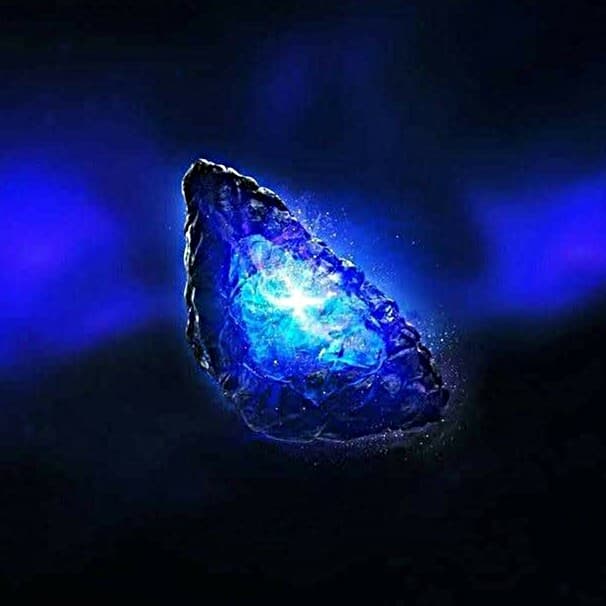
The Space Stone
In LifeOS, the Social Game aligns with the Space Stone.
Because this game is fundamentally about understanding space.
Not just physical space.
Social space.
Emotional space.
Collective space.
Every human being wants:
recognition,
belonging,
respect,
and a place in the world.
People want to create their own space:
in teams,
in companies,
in friendships,
in communities,
and in society itself.
But there is another side to this understanding.
It is equally important to give space to others.
And honestly, this single understanding could solve countless conflicts.
Most conflicts happen because people try to:
control others,
dominate others,
impose beliefs,
violate boundaries,
or deny individuality.
Relationships break when people stop giving each other emotional space.
Societies become polarised when groups stop allowing coexistence.
Even environmental destruction comes from humanity failing to respect the space of other living beings on Earth.
The idea is simple yet powerful:
Everyone needs space to exist authentically.
Understanding this changes the way we interact with people and the world.
Winning the Social Game
Winning the Social Game does not mean becoming famous or socially dominant.
It means learning how to coexist intelligently and compassionately with the world around you.
A strong Social Game includes:
healthy communication,
emotional intelligence,
leadership,
collaboration,
cultural awareness,
environmental responsibility,
and the ability to create meaningful impact beyond yourself.
Because ultimately, humans are deeply interconnected.
No one truly succeeds alone.
Final Thought
The Social Game teaches one of the most important lessons in LifeOS:
You are not the center of existence.
You are part of a larger system.
A family.
A society.
A civilisation.
An ecosystem.
A planet.
And life becomes far more peaceful when we learn to:
express ourselves without controlling others,
build our own space without destroying someone else’s,
and coexist without constantly competing for dominance.
Understand people.
Understand society.
Understand nature.
Most importantly:
Understand space.
That is how you earn the Space Stone.